

(Spinning (Craft
Introduction
 The textile industry in Syria, one of the oldest industries known to mankind, and many scientists believe that Mesopotamia is the first citizen of the textile industry
In Syria, specifically Mehr artisans Damascenes in the fabrics industry and I knew their products by their names all over the world such as the fabrics Aldamsk and brocade which is still well-known to this day
The Industrial Revolution began in Europe from textile industry specifically Vochtera loom mechanical and mechanical spinning machine which developed the later introduction of automatic operations by inventing and jacquard machine human computer scientist income. It is a jacquard machine, in principle, the first computer
In Syria, the textile industry hand remained until the second decade of this century, where mechanical looms entered Syria through the first Spinning and Weaving Company, a Syrian Company for Spinning and Weaving in Aleppo, which began its work in 1933. And it was followed by several companies in Damascus, Homs and Aleppo, where the industry focused and still
Issued nationalization decisions and incorporated the impact companies nationalized under / 12 company which companies: quintet - spinners and Almnasc - molasses - modern - nylon and the Middle Damascus - Syrian Spinning and Weaving - Shahba Spinning and Weaving - National Spinning and Weaving - Satks tissue silk - Arab underwear for Aleppo - the company laundries in Homs. Flocked all counting under the supervision of the Federation of Textile Industries
In the seventies and Alosmanian following companies created
Hama company for cotton yarn - Waleed Spinning - Carpet Company Damascus - Al Furat Spinning - Wool Hama company - silk Aldirikic - protoplasm Spinning - Idleb Spinning - Spinning Hasaka project - garments in Damascus - Industrial Wear Aleppo
As of 1975 brought General Organization for Textile Industries Legislative Decree No. 2174 on the basis of Legislative Decree No. / 18 / of 1974, as amended by Decree No. / 20 / for the year 1994
This institution became Supervisor / 26 / company and the project after the completion of the spinning projects in Idlib and Latakia years 1997/1998 and is currently working on the operation of the spinning project in the protoplasm
Producing subsidiary of the General Organization for Textile Industries companies following commodities
100% cotton yarn of all kinds demobilized - tops - turbo
Cotton polyester blended yarns - Cotton Viscose
100% woolen and blended
spinning
In Arabic
Spun wool or cotton: Vtlth leads Palmghazl. (Spindle): spinning everywhere. (C) spindles
Spindle: What do spin wool, cotton and the like, manually or automatically
And Almoghaizl mini flour rope
Definition of spinning
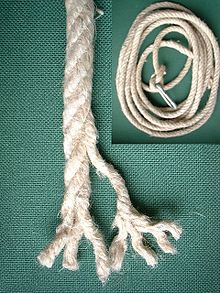
Spinning is an ancient craft made a wicking fabric of natural fibers or synthetic where with each other to form a thread, or strand. In the past and for several thousands of years, spun fiber by hand using Kalmghazl and distaff simple tools, a round piece of wood make it at the top of the spindle and prove harmful to the above promises spindle underneath and Aernas a rod or division of wood and the like, make it Spaikh cotton yarn. Spinning wheel has been used at the ends of the central images Vazdad production, quantitative production was only after Alqon eighteenth with the beginnings of the industrial revolution
Yarn spun properties vary based on the raw materials used, the length of the fiber, and paralleled by, and the amount of fiber used, the degree of twist
File: Rhof-kardierenSpinnenStricken.ogg
The purpose of the spinning phase: Getting a string of spinning machines is the final stage in the technological process, which aims to transform the polyester filaments into yarn
The goal of this stage: The objective of the spinning stage is to get the brominated or drag strip to the final product of the Department of spinning, namely thread, which is characterized by specific characteristics (yarns, tensile strength, uniformity, the number of Albermat, etc ...). Boils down to the essence of the spinning process in the linen on the spinning machine is withdrawn and promoted even tigress required and then be given a certain Bermat to gain durability needed and turns it into a string is wrapped on the pipe, and then be transferred to the stage of winding the universe (CDs), and then later to the subsequent stages Kalnsj or knitting and sewing
Vah cotton fabrics and dyed and printed
Wool carpets 100%
Underwear and ready-made clothing and socks. In addition to cotton, medical gauze
Public sector companies is composed of / 8 / specialized companies to produce cotton yarn and one company for the production of woolen, Inc. for the production of natural silk
It also includes / 6 / integrated companies producing yarn and silk fabrics and synthetic textile company specialized for the production of cotton fabrics. In addition to the two companies for the production of interior fabrics and two ready-to-wear and one company specialized carpeted mystic and company to produce socks and nylon filaments and form these companies public sector textile industries
Wool carpets 100%
Underwear and ready-made clothing and socks. In addition to cotton, medical gauze
Public sector companies is composed of / 8 / specialized companies to produce cotton yarn and one company for the production of woolen, Inc. for the production of natural silk
It also includes / 6 / integrated companies producing yarn and silk fabrics and synthetic textile company specialized for the production of cotton fabrics. In addition to the two companies for the production of interior fabrics and two ready-to-wear and one company specialized carpeted mystic and company to produce socks and nylon filaments and form these companies public sector textile industries
Yarn spun properties
Materials: yarn can be spun from a wide variety of materials, including natural fibers and synthetic fibers
Twisting and cabled: Zoe thing which prevented him and collected and grip. And twirl the rope: twist of the parties or make it Taqan
The twisting is the spiral shape of the components of the string, or the number of turns per unit length around the axis of the filament or string or rope. Expressed as the number of Albermat per meter or per inch for clues, and the angle of twist or controversy for the ropes. The yarn is characterized by the direction of twist: Spin Right (twirl Z) and twists north (twirl S). You can twirl two threads with each other to form a thicker thread called this process Bazwai. The
yarns spun be manually twirl right, then Zoaha with some Berm north
Zwai ways: It can yarns composed of two threads Zoe untwisted or more with each other. Give ways Zwai _khasaisa beautiful forms of filaments
Twisting effect on the properties of yarns and fabrics made from them
Filaments can be few or medium Ouaalah twisting. And twisting up to be zero (1-4) screw / inch, low-twisting be up to (6-12) screw / inch, medium and twisting up to be (20-25) screw / inch, while the high-twisting be up to (40-80) screw inch
Increasing twisting yarn structure monolith become more, which detract from the measurement of the thread (tiger), and increases the durability of threaded up to a certain limit (20 screw / inch), then do not affect the increase in the number Albermat the strength of the thread, so that access to (40 screw / inch) where decreasing durability and turns to the forces of cut fiber crash. Also, increasing twisting increases the wear resistance. Increase twisting also lead to a decrease absorbency fiber, which decreases the amount of lateral space available to absorb water, fiber, and decrease the amount of water likely Ahtoiha between the fibers, cloth and reduces the permittivity of water vapor to pass. Thermal dielectric also decreases because of the shrinking size of dead air spaces between the fibers, which operates a thermal insulator
The materials used in the textile industry
Divides the materials used in the textile industry as the source of the material to
Natural materials, and are divided into
Plant materials
Fiber-related seed cotton, and called cotton fibers
Bast: stalk of the plant, such as flax, hemp, jute
Animal materials: wool, silk
Metal materials, asbestos, gold, copper
Manufacturing materials, which originally natural materials the Human converted to another form of using chemical and physical treatments such as viscose, acetate
Synthetic materials produced from petroleum materials such as polyester, nylon, polyethylene
Types of spinning machines
According to the product quality of the thread, there are two types of productivity of spinning machinery:

The ring spinning machines
They are the most popular, the most widely used and weaved, and
the high ductility, where it produces leads from different tiger, especially high ones, and have a solid product Khitha and The strength of high tension
Spinning turboprop machines [English]: by pulling drag strip and twist where the chamber is composed of a fixed part and one movable (Rutter) spins at high speeds and exposed the capillaries to the forces of aerodynamic, strings generated by these machines Nmrha thick and a few Bermadtha, which is used exclusively for cloth jeans
Source: Central Bureau of Statistics
It evidenced by the states that the increase in the number of workers in the industrial sector was increased by 6.1% in 1999 compared to 1994, while in the textile sector, the figure was about 5.17% for the same period and it can be said that the actual increase in the number of employees was in the textile industry and part of it the rest of the industry account and the increase starting in 1997 with the entry of any new production projects and point out that the number will reach more than 31 thousand workers upon completion of a project run protoplasm
(What is the current reality of Textile Industries (public sector
We point out that the beginning of the histological sector tasks previously identified to meet the needs of citizens and other government sectors, mainly, in addition to social functions known labor run
On this basis, established sections and specialized laboratories to provide fabrics for sugar mills, flour mills and grain silos Foundation cotton in addition to some of the needs of the army and the armed forces, which consume about half the production of textile companies of fabrics. The spinning plants meet the needs of textile companies, and distributes the surplus in the form of quotas to private sector enterprises in this nascent actually had product demand exceeds supply, which sometimes led to the emergence of the so-called black market
In addition, it has been part of the textile products companies shopping within the payments agreements to the system of socialist countries to repay part of the debt of these countries to Syria
Thus it can be said that most of the companies were not suffering from the issue of disposal of their products, and confined their interest in achieving greater production capacity at a time when quality needed attention to the lack of real competition at the time, did not receive the companies were suffering from particularly like the feet of production lines and a lack of spare parts the nature of the problems As a result of the shortage of foreign currency, and in the seventies there was a boom represented the establishment of a new spinning plants and replaced the tissue sections in seersucker companies and returned to stop these operations at the beginning of the eighties without being completed. In the second half of the nineties leap seconds in the spinning industry to enter the three large facilities equipped with the latest equipment occurred. Increased sharply yarn production exceeded market demand dramatically. The result has become a corporate enterprise include
Modern companies complete - old firms occurred fully - old firms occurred partly old and companies have not undergone any renovation. As a result, the products were distributed between the products of high quality and medium quality products and low-quality products.
Despite the relative improvements in equipment, machinery technology, this was not associated with the lifting of the capabilities of the technical staff of both quantity and type hand. Enterprise companies have seen bleeding ongoing technical cadres to the private sector accompanied by supplying them with new elements stopped and the result was a significant shortfall in the leadership cadres qualified administratively and technically, and included the technological, financial and commercial areas.
We saw the latter half of the nineties the beginning of the global crisis, fell steadily during which consumption and a decline in combined down consumers' real incomes growth in much of the world has tumbled by selling products significantly the prices at the time of Hafez production rates. Production and consumption has surpassed accumulated large amounts of it to the producers. This began with the show features our companies has risen Mkhazneha increased financial entanglements. This data has coincided with a rise in production (of yarn) sharply wider and move on to manufacture synthetic products imported due to changes in fashion trends on the one hand and lower prices on the other hand, compared with the price of cotton materials
High prices of cotton and yarn - unjustified - in the internal market for real prices on the world market has contributed.
In front of all, the institution made years ago a set of proposals to the government to help get out of the crisis was the most important
- To allow the adoption of agents to market products in the foreign market
- Edit raw cotton price and handed over to companies spinning world prices
- Allowing the sale of cotton yarn externally blockbuster prices
- Establishment of the Faculty of Textile sector to supplement the histological necessary cadres
- Create marketing centers in countries with strong potential for the Syrian textile goods
- Allow the sale on credit for a period of 90-12 days are also in the rest of the countries in line with the prevailing business methods.
- Wage adjustment systems
- Imposing customs duties on imports of textile materials artificial synthetic
And the outcome of several meetings with the prime minister since 1996, issued a series of resolutions, including:
1 - the decision of the export No. / 1587 / dated 14/5/1997 to allow the Foundation and its companies export products
Of cotton yarn in accordance with the blockbuster prices globally
2 - President of the Council of Ministers Resolution No. 4204 date 03.08.1998 included allowing enterprise companies
Contracting with external agents commission agent for the marketing of products
3 - Law No. / 7 / dated 01/07/1999, which exempted cotton seeds and its aftermath, including material released
Cotton yarns and products of agricultural production tax stipulated by Law 248 of 1957
4 - Minutes of the meeting of the prime minister who allowed the date 10.07.2000 whereby the textile companies to sell
Almkhazan accumulated up to 30.6.2000 calculates the price of cotton on the inside manufactured according to world prices
And the exclusion of benefits Cotton Ginning Foundation
5 - Mr. Cabinet decision No. 5571/1 date of 10/12/2000 calculates the price of cotton ginned
The yarn involved in manufacturing intent to export in accordance with the world price plus shipping costs
And insurance.
6 - the abolition of many of the decisions and communications which restricted the work of departments
7 - a result of the meeting held under the chairmanship of the Prime Minister dated 22/04/2001 issued a number of the decisions to resolve the issue price of cotton, yarn and textiles in the domestic and foreign markets as it included proper cottons and all of its products at the price the global vogue, whether external manufacturing and procedure, and is Haleaoda necessary to apply procedures
8 - the decision of the Ministry of Economy No. 1583/2000 lifting of the customs value of the dollar from 23 to 26 SP SP imports of artificial and synthetic textile materials. Excluded from it later on raw materials and half made these decisions to lift the export enterprise companies to / 120 / million dollars has been contributed exporter externally in 2000 is expected to increase this year as a result of the development of spinning and enter the modern labor companies as raise this year the figure so that will exceed the value of the Syrian yarn exports Mahlojh of cotton exports
What are the prospects for the textile industry in Syria
Cotton is an important strategic crop and form working in the cultivation and processing of all stages about 30% of the workforce hand according to some statistics production has amounted to about one million tons of cotton beloved gives 320 thousand tons of ginned cotton. And require spinning the existing plants currently amount / 170 / thousand tons of it and the rest is exported to world markets. Based on this fact, we need to focus on the following areas
1 - from the reality of water resources, it should be thoughtful roof cotton production development and point out a number between 650-700 thousand tons of cotton loved
2 - Develop a plan to manufacture the vast majority of it to the spinning yarns with waste processing(plants (has made inroads in this direction
3 - gradually move to the yarn produced ready-made garments manufacturing and a special focus on the internal knitwear and the T - shirt and jeans, as well as other fabrics, towels and bathrobe create coefficient targeting foreign markets
4 - In order to achieve the greatest benefit in terms of added value and operation of labor required modernization of the public sector and private companies alike to get products to a good specification with competitive prices where increasing requirements of consumers N. quality (and will be the public sector companies to enter in 2005, has completed an interview with all its plants at a cost of Tkdrah convergence $ 200 million
5 - restructuring of the public sector (which is currently being studied) as well as re-examine the reality of the private sector
And overcome many weaknesses
Success in this requires a number of basic procedures Baranja is as follows
- Quickly and effectively to the development of textile institutes and centers, vocational rehabilitation to secure sufficient teaching staff and well qualified
- Secure high qualification of teaching staff of the Faculty of Textile to provide good technical cadres in the coming period
 - Attracting technical staff - financial - marketing - administrative adoption of a new wage system fan
- Creation of information center that provides services to manufacturers Syrians include: global statistics - target markets - competitors - Syrian definition of the products and manufacturers - to media and publicity campaigns going on (this method and follow in Malaysia - Indonesia .. etc
- Creation of marketing centers after securing qualified cadres responsible for later commercialization process of the Syrian products to reach the consumer directly and cutting out middlemen
- Develop a comprehensive plan that includes raising the professional and managerial competencies in cooperation with the hand or a European center with experience (Tunisian and Moroccan experience).
- To move urgently to the application of total quality systems in each facility and laboratory finding body responsible for implementing it are binding.
- Export control effectively to check their quality so as to maintain the reputation of the Syrian products.
· Textile industry itself I found in the face of stiff competition - without being ready for it enough to prepare for it, and the coming years will be more difficult with the next trade liberalization will soon be possible to continue to develop protection barriers as it is now. This requires from all stakeholders in the public and private sectors to prepare him well, also requires actions and measures government Mdorjsh to help manufacturers in this confrontation, and fall some of the actions and attempts, application management experience goals are currently studying the restructuring of the industrial sector and development in addition to the steps update accelerating factor for the public sector within the list of these measures and procedures.
· Finally, we see the need for coordination between the public and private sectors to develop a joint plan for the development of the industry to secure the necessary raw materials (Yarns - Fabrics - Supplies .. to phase out import and secure the needed clothing industry, which will be the biggest goal since realized greater added value, which attracts the largest number of hand including working really contributes to the strengthening of the national economy and the development of society
The textile industry of the oldest professions ancient Egyptian Amthnha since the era of the Pharaohs until the beginning of the nineteenth century; through the Ottoman Empire, which was formed images done in very limited small workshops; even evolved with the introduction of modern industry in the workshops Bulaq district, Mansoura in the era of Muhammad Ali Pasha , until I got to 30, while the other workshop, and worked with more than 12 thousand workers
The textile industry is the most important in Egypt in the mid-nineteenth century, and in 1868 was in Egypt 441 workshop for dyeing employs about 1,700 workers, representing one-third of workers in the textile craft, and adopted the craft while the other on cheap labor through the use of women in private rural work Masri
The 1873 statistics show that the number of textile workers in Cairo and Alexandria reached 6037 workers, and in the remaining quarters, 22,187 workers, and were deployed in major cities of Mahalla, Mansoura and Damietta, and Menouf, Fayoum, Beni Suef, Assiut
Working in this sector, according to statements made by Abdul Fattah Ibrahim, President of the General Trade Union of Workers spinning and weaving, almost one million workers between men and women, divided in about 4000 factory public and private sector
The "Abraham" that the textile and garment workers sector, is one of the most important labor sectors in Egypt, pointing to the foot of the textile industry in Egypt, denounced the risks to the industry at the moment of a lot of problems, threaten the future and reflect on the situation its workers
The head of the union, that the textile industry had been neglected for years at the hands of businessmen and previous administrations as well as fierce competition from foreign countries, pointing out that in the eighties had a committee of experts and professors of Agriculture put a full study of the cultivation of short and medium staple cotton, in certain areas as well as to keep the cotton long a staple, but the government failed to implement the study until we reached the current situation of Egypt and are threatened to get out of the industry altogether
And Abdel Fattah Ibrahim, that there is a glimmer of hope began to appear, explaining that the US Office "Warner" to elaborate study of the restructuring and development of companies and factories of the public sector, will begin work later this month, and will visit a number of companies to get to know their status and the requirements for the promotion of industry visits other
The President of the Association of Textile, that office will after visiting for 25 companies - candidates for the development of cross-office at a cost of up to 6 billion Gnih-, dividing the corporate collections of each group of 5 companies, that the government begin in desktop application development immediately the recommendations of the first set
The fruitful cooperation between the engineer Ibrahim Mahlab Prime Minister and the government, and those responsible for the textile sector is a major breakthrough for the protection and modernization of the industry, which has suffered many years of neglect, where, since the revolution of January 25 this sector did not witness cooperation and attention, such as is happening now
Here praised the union's head, the steps taken by the government to protect cotton and related industries by saying "It confirms its desire to save the industry," and urged the engineer Ibrahim Mahlab Prime Minister to continue on the same path until the work of the cotton and the implementation of recommendations issued by the end as soon as possible
Association President pointed out that the study prepared for the restructuring of development can be implemented now and will replace a large number of industry problems as the acres of cotton will come weak production and thus can be for farmers to make a profit more and sell less invaluable addition to consuming less water than the current situation, and that his presence a few Earth period, stressing the need for the government's attention to this study and applied starting next season
On the other hand, represent a global fiercer competition, the entry of new states strongly in the textile field, such as Turkey, India, Pakistan, China, Dgaudha on the private sector is relatively weak and less competitive, in light of the rapid development in the industry .. which affects dramatically to reduce the volume of employment in the private sector, and the suffering of the public sector companies from the number of stalled labor without work because of the deteriorating situation of companies
Here Mounir Fakhri Abdel Nour, Minister of Industry and Trade said, -ohd participants in the Supreme Committee for Cotton Al Masri, the Egyptian government is keen to remove all obstacles facing the textile sector, and is working to increase its competitiveness, pointing out that the industry is one of the oldest industries and most importantly, and it employs more than a million workers factories, private and public sector
The minister added that the current government is interested textile sector significantly to the development and reform of the industry in all its stages, and work to help them through a number of actions, including the fight against smuggling at the border crossing points, which was a heavy burden for this sector operations, and limit its ability within the market local, which had a positive impact on operating factories in the Egyptian market during the last period
It is natural that these problems negatively reflect on the conditions of textile workers in the public and private sectors, where we find that the wages of the workers of this sector is one of the lowest wage levels, and the conditions under which the textile and garment workers, in terms of working hours and the lack of industrial security elements, are very dangerous
This is confirmed by Hisham Younis, a working textile sector, pointing out that this sector is the poorest among the sectors of the state compared to the sectors of oil, electricity and other, explaining that the spinning sector is productive and not a service, and as a result of the lack of cotton stopped many factories
He had issued Ibrahim Mahlab Prime Minister decision to carry No. 2126 for the year 2015 to form a higher committee for cotton under his chairmanship and membership of the Trade and Industry Minister Mounir Fakhry Abdel Nour, Minister of Investment, Ashraf Salman, Minister of Agriculture, Dr. Salah Al Hilal
The resolution included Abdel Fattah Ibrahim, President of the General Union of Textile Workers, and the President of the Federation of Industries Engineer Mohammed Al Suwaidi, in order to save the Egyptian cotton certified by national and industry that the committee will prepare a report on the results of the study to be undertaken by the Egyptian cotton industries dependent upon within one month from the date of the decision
He described the organizers of the textile industry in Egypt this decision as a positive step toward a long way to save the textile industry from collapse Judge blows in recent years, and resulted in the closure of hundreds of factories and the displacement of thousands of workers
He explained Mohamed Sobh rubble, a captain in the peasants, the cultivation of cotton in Egypt exposed several decades ago for many of the problems until he almost disappears, explaining that there are warnings to agricultural experts, Egyptian cotton disappearance, as well as the accumulation of cotton in warehouses and declining farmer for cultivation crisis due to lack of develop gins and spinners in Egypt to suit Egyptian cotton combination
He noted, rubble to the neglect of the state for the marketing of Egyptian cotton, cotton yarn buying companies cheap price, in addition to the smuggling of Egyptian cotton seed to the outside, resulting in a collapse of the Egyptian cotton crop
Source: Central Bureau of Statistics
It evidenced by the states that the increase in the number of workers in the industrial sector was increased by 6.1% in 1999 compared to 1994, while in the textile sector, the figure was about 5.17% for the same period and it can be said that the actual increase in the number of employees was in the textile industry and part of it the rest of the industry account and the increase starting in 1997 with the entry of any new production projects and point out that the number will reach more than 31 thousand workers upon completion of a project run protoplasm
(What is the current reality of Textile Industries (public sector
We point out that the beginning of the histological sector tasks previously identified to meet the needs of citizens and other government sectors, mainly, in addition to social functions known labor run
On this basis, established sections and specialized laboratories to provide fabrics for sugar mills, flour mills and grain silos Foundation cotton in addition to some of the needs of the army and the armed forces, which consume about half the production of textile companies of fabrics. The spinning plants meet the needs of textile companies, and distributes the surplus in the form of quotas to private sector enterprises in this nascent actually had product demand exceeds supply, which sometimes led to the emergence of the so-called black market
In addition, it has been part of the textile products companies shopping within the payments agreements to the system of socialist countries to repay part of the debt of these countries to Syria
Thus it can be said that most of the companies were not suffering from the issue of disposal of their products, and confined their interest in achieving greater production capacity at a time when quality needed attention to the lack of real competition at the time, did not receive the companies were suffering from particularly like the feet of production lines and a lack of spare parts the nature of the problems As a result of the shortage of foreign currency, and in the seventies there was a boom represented the establishment of a new spinning plants and replaced the tissue sections in seersucker companies and returned to stop these operations at the beginning of the eighties without being completed. In the second half of the nineties leap seconds in the spinning industry to enter the three large facilities equipped with the latest equipment occurred. Increased sharply yarn production exceeded market demand dramatically. The result has become a corporate enterprise include
Modern companies complete - old firms occurred fully - old firms occurred partly old and companies have not undergone any renovation. As a result, the products were distributed between the products of high quality and medium quality products and low-quality products.
Despite the relative improvements in equipment, machinery technology, this was not associated with the lifting of the capabilities of the technical staff of both quantity and type hand. Enterprise companies have seen bleeding ongoing technical cadres to the private sector accompanied by supplying them with new elements stopped and the result was a significant shortfall in the leadership cadres qualified administratively and technically, and included the technological, financial and commercial areas.
We saw the latter half of the nineties the beginning of the global crisis, fell steadily during which consumption and a decline in combined down consumers' real incomes growth in much of the world has tumbled by selling products significantly the prices at the time of Hafez production rates. Production and consumption has surpassed accumulated large amounts of it to the producers. This began with the show features our companies has risen Mkhazneha increased financial entanglements. This data has coincided with a rise in production (of yarn) sharply wider and move on to manufacture synthetic products imported due to changes in fashion trends on the one hand and lower prices on the other hand, compared with the price of cotton materials
High prices of cotton and yarn - unjustified - in the internal market for real prices on the world market has contributed.
In front of all, the institution made years ago a set of proposals to the government to help get out of the crisis was the most important
- To allow the adoption of agents to market products in the foreign market
- Edit raw cotton price and handed over to companies spinning world prices
- Allowing the sale of cotton yarn externally blockbuster prices
- Establishment of the Faculty of Textile sector to supplement the histological necessary cadres
- Create marketing centers in countries with strong potential for the Syrian textile goods
- Allow the sale on credit for a period of 90-12 days are also in the rest of the countries in line with the prevailing business methods.
- Wage adjustment systems
- Imposing customs duties on imports of textile materials artificial synthetic
And the outcome of several meetings with the prime minister since 1996, issued a series of resolutions, including:
1 - the decision of the export No. / 1587 / dated 14/5/1997 to allow the Foundation and its companies export products
Of cotton yarn in accordance with the blockbuster prices globally
2 - President of the Council of Ministers Resolution No. 4204 date 03.08.1998 included allowing enterprise companies
Contracting with external agents commission agent for the marketing of products
3 - Law No. / 7 / dated 01/07/1999, which exempted cotton seeds and its aftermath, including material released
Cotton yarns and products of agricultural production tax stipulated by Law 248 of 1957
4 - Minutes of the meeting of the prime minister who allowed the date 10.07.2000 whereby the textile companies to sell
Almkhazan accumulated up to 30.6.2000 calculates the price of cotton on the inside manufactured according to world prices
And the exclusion of benefits Cotton Ginning Foundation
5 - Mr. Cabinet decision No. 5571/1 date of 10/12/2000 calculates the price of cotton ginned
The yarn involved in manufacturing intent to export in accordance with the world price plus shipping costs
And insurance.
6 - the abolition of many of the decisions and communications which restricted the work of departments
7 - a result of the meeting held under the chairmanship of the Prime Minister dated 22/04/2001 issued a number of the decisions to resolve the issue price of cotton, yarn and textiles in the domestic and foreign markets as it included proper cottons and all of its products at the price the global vogue, whether external manufacturing and procedure, and is Haleaoda necessary to apply procedures
8 - the decision of the Ministry of Economy No. 1583/2000 lifting of the customs value of the dollar from 23 to 26 SP SP imports of artificial and synthetic textile materials. Excluded from it later on raw materials and half made these decisions to lift the export enterprise companies to / 120 / million dollars has been contributed exporter externally in 2000 is expected to increase this year as a result of the development of spinning and enter the modern labor companies as raise this year the figure so that will exceed the value of the Syrian yarn exports Mahlojh of cotton exports
What are the prospects for the textile industry in Syria
Cotton is an important strategic crop and form working in the cultivation and processing of all stages about 30% of the workforce hand according to some statistics production has amounted to about one million tons of cotton beloved gives 320 thousand tons of ginned cotton. And require spinning the existing plants currently amount / 170 / thousand tons of it and the rest is exported to world markets. Based on this fact, we need to focus on the following areas
1 - from the reality of water resources, it should be thoughtful roof cotton production development and point out a number between 650-700 thousand tons of cotton loved
2 - Develop a plan to manufacture the vast majority of it to the spinning yarns with waste processing(plants (has made inroads in this direction
3 - gradually move to the yarn produced ready-made garments manufacturing and a special focus on the internal knitwear and the T - shirt and jeans, as well as other fabrics, towels and bathrobe create coefficient targeting foreign markets
4 - In order to achieve the greatest benefit in terms of added value and operation of labor required modernization of the public sector and private companies alike to get products to a good specification with competitive prices where increasing requirements of consumers N. quality (and will be the public sector companies to enter in 2005, has completed an interview with all its plants at a cost of Tkdrah convergence $ 200 million
5 - restructuring of the public sector (which is currently being studied) as well as re-examine the reality of the private sector
And overcome many weaknesses
Success in this requires a number of basic procedures Baranja is as follows
- Quickly and effectively to the development of textile institutes and centers, vocational rehabilitation to secure sufficient teaching staff and well qualified
- Secure high qualification of teaching staff of the Faculty of Textile to provide good technical cadres in the coming period
- Attracting technical staff - financial - marketing - administrative adoption of a new wage system fan- Creation of information center that provides services to manufacturers Syrians include: global statistics - target markets - competitors - Syrian definition of the products and manufacturers - to media and publicity campaigns going on (this method and follow in Malaysia - Indonesia .. etc
- Creation of marketing centers after securing qualified cadres responsible for later commercialization process of the Syrian products to reach the consumer directly and cutting out middlemen
- Develop a comprehensive plan that includes raising the professional and managerial competencies in cooperation with the hand or a European center with experience (Tunisian and Moroccan experience).
- To move urgently to the application of total quality systems in each facility and laboratory finding body responsible for implementing it are binding.
- Export control effectively to check their quality so as to maintain the reputation of the Syrian products.
· Textile industry itself I found in the face of stiff competition - without being ready for it enough to prepare for it, and the coming years will be more difficult with the next trade liberalization will soon be possible to continue to develop protection barriers as it is now. This requires from all stakeholders in the public and private sectors to prepare him well, also requires actions and measures government Mdorjsh to help manufacturers in this confrontation, and fall some of the actions and attempts, application management experience goals are currently studying the restructuring of the industrial sector and development in addition to the steps update accelerating factor for the public sector within the list of these measures and procedures.
· Finally, we see the need for coordination between the public and private sectors to develop a joint plan for the development of the industry to secure the necessary raw materials (Yarns - Fabrics - Supplies .. to phase out import and secure the needed clothing industry, which will be the biggest goal since realized greater added value, which attracts the largest number of hand including working really contributes to the strengthening of the national economy and the development of society
The textile industry of the oldest professions ancient Egyptian Amthnha since the era of the Pharaohs until the beginning of the nineteenth century; through the Ottoman Empire, which was formed images done in very limited small workshops; even evolved with the introduction of modern industry in the workshops Bulaq district, Mansoura in the era of Muhammad Ali Pasha , until I got to 30, while the other workshop, and worked with more than 12 thousand workers
The textile industry is the most important in Egypt in the mid-nineteenth century, and in 1868 was in Egypt 441 workshop for dyeing employs about 1,700 workers, representing one-third of workers in the textile craft, and adopted the craft while the other on cheap labor through the use of women in private rural work Masri
The 1873 statistics show that the number of textile workers in Cairo and Alexandria reached 6037 workers, and in the remaining quarters, 22,187 workers, and were deployed in major cities of Mahalla, Mansoura and Damietta, and Menouf, Fayoum, Beni Suef, Assiut
Working in this sector, according to statements made by Abdul Fattah Ibrahim, President of the General Trade Union of Workers spinning and weaving, almost one million workers between men and women, divided in about 4000 factory public and private sector
The "Abraham" that the textile and garment workers sector, is one of the most important labor sectors in Egypt, pointing to the foot of the textile industry in Egypt, denounced the risks to the industry at the moment of a lot of problems, threaten the future and reflect on the situation its workers
The head of the union, that the textile industry had been neglected for years at the hands of businessmen and previous administrations as well as fierce competition from foreign countries, pointing out that in the eighties had a committee of experts and professors of Agriculture put a full study of the cultivation of short and medium staple cotton, in certain areas as well as to keep the cotton long a staple, but the government failed to implement the study until we reached the current situation of Egypt and are threatened to get out of the industry altogether
And Abdel Fattah Ibrahim, that there is a glimmer of hope began to appear, explaining that the US Office "Warner" to elaborate study of the restructuring and development of companies and factories of the public sector, will begin work later this month, and will visit a number of companies to get to know their status and the requirements for the promotion of industry visits other
The President of the Association of Textile, that office will after visiting for 25 companies - candidates for the development of cross-office at a cost of up to 6 billion Gnih-, dividing the corporate collections of each group of 5 companies, that the government begin in desktop application development immediately the recommendations of the first set
The fruitful cooperation between the engineer Ibrahim Mahlab Prime Minister and the government, and those responsible for the textile sector is a major breakthrough for the protection and modernization of the industry, which has suffered many years of neglect, where, since the revolution of January 25 this sector did not witness cooperation and attention, such as is happening now
Here praised the union's head, the steps taken by the government to protect cotton and related industries by saying "It confirms its desire to save the industry," and urged the engineer Ibrahim Mahlab Prime Minister to continue on the same path until the work of the cotton and the implementation of recommendations issued by the end as soon as possible
Association President pointed out that the study prepared for the restructuring of development can be implemented now and will replace a large number of industry problems as the acres of cotton will come weak production and thus can be for farmers to make a profit more and sell less invaluable addition to consuming less water than the current situation, and that his presence a few Earth period, stressing the need for the government's attention to this study and applied starting next season
On the other hand, represent a global fiercer competition, the entry of new states strongly in the textile field, such as Turkey, India, Pakistan, China, Dgaudha on the private sector is relatively weak and less competitive, in light of the rapid development in the industry .. which affects dramatically to reduce the volume of employment in the private sector, and the suffering of the public sector companies from the number of stalled labor without work because of the deteriorating situation of companies
Here Mounir Fakhri Abdel Nour, Minister of Industry and Trade said, -ohd participants in the Supreme Committee for Cotton Al Masri, the Egyptian government is keen to remove all obstacles facing the textile sector, and is working to increase its competitiveness, pointing out that the industry is one of the oldest industries and most importantly, and it employs more than a million workers factories, private and public sector
The minister added that the current government is interested textile sector significantly to the development and reform of the industry in all its stages, and work to help them through a number of actions, including the fight against smuggling at the border crossing points, which was a heavy burden for this sector operations, and limit its ability within the market local, which had a positive impact on operating factories in the Egyptian market during the last period
It is natural that these problems negatively reflect on the conditions of textile workers in the public and private sectors, where we find that the wages of the workers of this sector is one of the lowest wage levels, and the conditions under which the textile and garment workers, in terms of working hours and the lack of industrial security elements, are very dangerous
This is confirmed by Hisham Younis, a working textile sector, pointing out that this sector is the poorest among the sectors of the state compared to the sectors of oil, electricity and other, explaining that the spinning sector is productive and not a service, and as a result of the lack of cotton stopped many factories
He had issued Ibrahim Mahlab Prime Minister decision to carry No. 2126 for the year 2015 to form a higher committee for cotton under his chairmanship and membership of the Trade and Industry Minister Mounir Fakhry Abdel Nour, Minister of Investment, Ashraf Salman, Minister of Agriculture, Dr. Salah Al Hilal
The resolution included Abdel Fattah Ibrahim, President of the General Union of Textile Workers, and the President of the Federation of Industries Engineer Mohammed Al Suwaidi, in order to save the Egyptian cotton certified by national and industry that the committee will prepare a report on the results of the study to be undertaken by the Egyptian cotton industries dependent upon within one month from the date of the decision
He described the organizers of the textile industry in Egypt this decision as a positive step toward a long way to save the textile industry from collapse Judge blows in recent years, and resulted in the closure of hundreds of factories and the displacement of thousands of workers
He explained Mohamed Sobh rubble, a captain in the peasants, the cultivation of cotton in Egypt exposed several decades ago for many of the problems until he almost disappears, explaining that there are warnings to agricultural experts, Egyptian cotton disappearance, as well as the accumulation of cotton in warehouses and declining farmer for cultivation crisis due to lack of develop gins and spinners in Egypt to suit Egyptian cotton combination
He noted, rubble to the neglect of the state for the marketing of Egyptian cotton, cotton yarn buying companies cheap price, in addition to the smuggling of Egyptian cotton seed to the outside, resulting in a collapse of the Egyptian cotton crop

ليست هناك تعليقات:
إرسال تعليق